
You believe Tesla’s stock will rise in value and want to take advantage of this chance by opening a long CFD position. For privacy and data protection related complaints please contact us at Please read our PRIVACY POLICY STATEMENT for more information on handling of personal data. In the Trade Balance, you can track your P&L, swap P&L (refers to swap rates in trading), your balance, equity, margin, and free margin.
Which is better out of CFDs and futures?
Using a demo account is essential as it provides a risk-free environment to practice trading with virtual funds, allowing you to build confidence and refine your strategies before entering live markets. This preparation can significantly enhance your performance when you begin trading with real money. When trading CFDs, you’re predicting whether an asset’s price will rise or fall. If you think the asset’s price will go up, you’ll ‘buy’ (go long) and if you think the price will fall, you’ll ‘sell’ (go short). The outcome of your prediction will determine whether you make a profit or incur a loss. For a more detailed analysis and specific recommendations tailored to different needs, you can refer to our comprehensive guides.
Our mobile trading apps, state-of-the-art technology and free educational tools make the process of switching your account to us is fast and effortless. There is also a small charge to fund positions overnight and for guaranteed stops (if triggered), and there may be additional fees for specialist tool. For every share CFD trade, you’ll pay a commission instead of a spread. We introduce people to the world of trading currencies, both fiat and crypto, through our non-drowsy educational content and tools. We’re also a community of traders that support each other on our daily trading journey.
What are the key features of CFD trading?
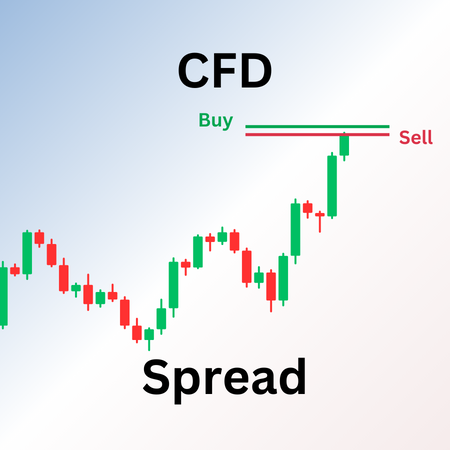
Instead, investors can trade derivative instruments such as CFDs, which track the price of the actual asset (known as the “underlying asset”). Underlying assets could include stocks and commodities, among others. If you invested $100 into a position with 10x leverage, the total size of your position would be $1,000. If the price of oil rose by 5%, your position would be worth $1,050, demonstrating a profit of $50. If the price fell by 5%, your position would be worth $950 — a loss of $50. If you completed the same trade without leverage, your profit or loss would be $5, depending on which direction the price moved.
What is a CFD?

50% of our users track their account balances, open positions and view past transactions using our trading app. Traders, as opposed to investors, are those who’d prefer to make use of leverage and derivatives to go long or short on various markets. It’s important to note that trading is inherently risky – and you could lose more than you expected if you don’t take the appropriate risk management steps.
- But always trade responsibly and never risk more than you can afford to lose.
- On Switch Markets, you can click on the Open Account button to sign up for an account.
- So, while traditional markets expose the trader to fees, regulations, commissions, and higher capital requirements, CFDs trim traders’ profits through spread costs.
- The Copy Trading module is available for individuals who can’t seem to get it right or simply need a pause to refocus.
- Unlike traditional investing, CFDs allow traders to profit in both rising and falling markets.
- Some regulators require that new customers pass an ‘appropriateness or suitability’ test.
Open A Free Account
To illustrate this, consider a scenario where a trader wants to invest $1,000 in Brent crude oil, and their broker requires a 10% margin. In this case, the trader would only need to deposit $100 to initiate the trade. Every account includes a free $100,000 virtual portfolio for you to practise with. Similarly, weekend positions will not net off against existing weekday contracts if the weekday contracts have stops/limits attached.
CFD calculator
The trader, or “buyer,” and the broker, or “seller,” agree to a contract in which they speculate on the price of an asset in market conditions. While the trader speculates on financial products, the key distinction between CFDs and regular trading should be noted. When engaging in CFD trading, you enter into a contract with a broker to exchange the difference in the value of a financial asset between the time the contract is opened and when it is closed. It’s crucial to understand that in CFD trading, you don’t actually own the underlying asset; instead, you’re speculating on its price movement.
Why trade on weekends with IG?
Say you want to trade US Crude, currently priced at $50, to secure a purchase price amid expectations of a potential price increase. In January, you buy a March US Crude futures CFD at $50, speculating that prices will rise before expiry. However, futures can also be traded in CFD form as derivatives (see below), which is how you’ll trade them using our platform. Below, you’ll see a Crude Oil future CFD with March expiry resulting from a market search. Using CFDs to hedge physical share portfolios is a popular strategy for many investors, especially in volatile markets. Brokers that offer trading signals and trade entry and exit points are particularly popular with beginners.
It also allows you to use leverage, meaning you can trade with a smaller amount of money, but this makes both potential profits and losses bigger. 71% of retail investor accounts lose money when trading CFDs with this provider. You should consider whether you understand how CFDs work and whether you can afford to take the high risk of losing your money. Educate yourself about the financial markets and the assets you’re trading. It’s also vital to use a demo account to practice before risking real money.
New Zealand CFD Broker BlackBull Launches IPO Roadshow With $90M Revenue Profile
The financial products offered by the promoted companies carry a high level of risk and can result in the loss of all your funds. Through WR Trading, beginners can access a wealth of knowledge and practical tips to gain a better understanding of CFD trading. The platform covers everything from chart patterns to how to set up your first trade. Compared to other platforms, WR Trading offers more reliable and up-to-date information so you can stay on top of market developments. WR Trading provides a valuable platform for beginners to learn from an experienced CFD trader and gain insights into successful trading strategies.
Example 1: Trading Currency CFDs
Sometimes traders may wish to gain a certain level of market exposure with minimal equity as part of their investment strategy. Trading with everestex review leverage means using capital which is a fraction of the position opened. The trader opens the position and sets parameters such as whether it’s a long or short position, leverage size, invested amount (margin), stop-loss and other parameters, depending on the broker. To start trading as a beginner, you can use tools and resources such as IG Academy to learn about financial trading. Then, you can hone your skills in a risk-free trading environment by using our demo account.
Trading Forex with CFDs
Also, implementing stop-loss orders can help protect against price movements and decrease overall losses. Bonds are debt securities issued by governments, municipalities, or corporations to raise capital. They offer CFD traders the option to speculate on the price movements of these debt instruments without owning the underlying asset.